Search by VIN, make, model, vehicle type, unit name, or by article number of any oil:

Oil for Volvo - C40 - EV 78 kWh AWD / 4WD (408 hp) (300 kW) (E400V12)
Volvo C40 EV 78 kWh AWD / 4WD (408 hp) (300 kW) (E400V12), year of issue from 2021 - Engine oil, automatic transmission, transmission oil, antifreeze, brake fluid, power steering fluid (power steering) and other fluids.
Nodes and assemblies
Differential, front
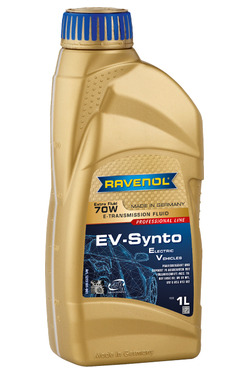
EV-Synto Extra Fluid 70W E-TF
RAVENOL EV-Synto Extra Fluid 70W E-TF is a full synthetic oil that has been specially developed for the requirements of modern electric vehicles. Selected additives ensure good electrical resistance and dielectric properties.
Compliance with the requirements:
BOT 805C EV, VW G 053 013 M2
Equivalents OEM:
BMW 83225A1D718, BMW 83225A1D718
- Available packaging
- Product parameters
The special formulation reduces the energy requirement and at the same time protects the electrical components in the drive train. RAVENOL EV-Synto Extra Fluid 70W E-TF minimizes friction and wear and thus ensures a long service life of the vehicle. It lubricates and cools the various components of electric vehicles.
Application Note
RAVENOL EV-Synto Extra Fluid 70W E-TF is ideally suited for year-round use in all modern electric vehicles. The special additives meet the requirements of many OEMs.
Developed for:
Reduction gearboxes in dry and wet engine systems from: Honda, BMW (i-Line), Mini, Mitsubishi, Fiat, Hyundai, Dong Feng, Geely, Chery, Kia, Tesla, Volvo, VW, Nio, Lotus, Rimac, Rivian, Polestar (Manufacturer's instructions must be followed)
First flush the transmission with
RAVENOL EV-Synto Extra Fluid 70W E-TF and then fill it with fresh oil. Follow the manufacturer's instructions!
Characteristics
- Dielectric properties
- Good electrical resistance
- High wear protection
- Excellent material compatibility
- Very good corrosion protection
- Long service life due to high oxidation stability
| Parameter | Unit | Value | Audit | |
|---|---|---|---|---|
| Type | Full synthetic |
Full synthetic
|
||
| Recomendations | BOT 805C EV, VW G 053 013 M2 |
BOT 805C EV, VW G 053 013 M2
|
||
| Compliant products | Castrol ON EV W1 |
Castrol ON EV W1
|
||
| Density at 20 °C | g/cm³ | 844 | EN ISO 12185 |
844
g/cm³
EN ISO 12185
|
| Color | tan | visual |
tan
visual
|
|
| Viscosity at 100 °C | mm²/s | 5.6 | DIN 51562-1 |
5.6
mm²/s
DIN 51562-1
|
| Viscosity at 40 °C | mm²/s | 23 | DIN 51562-1 |
23
mm²/s
DIN 51562-1
|
| Viscosity Index VI | 196 | DIN ISO 2909 |
196
DIN ISO 2909
|
|
| Pourpoint | °C | -72 | DIN ISO 3016 |
-72
°C
DIN ISO 3016
|
| Flashpoint | °C | 176 | DIN EN ISO 2592 |
176
°C
DIN EN ISO 2592
|
| Approvals | BOT 805C EV, VW G 053 013 M2 |
BOT 805C EV, VW G 053 013 M2
|
||
| Low Temperature Pumping Viscosity (MRV) at -55°C | mPa*s | 19.400 | ASTM D2983 |
19.400
mPa*s
ASTM D2983
|
| Thermal conductivity at 0 °C | mW/m∙K | 147.2 | ASTM D7896 |
147.2
mW/m∙K
ASTM D7896
|
| Thermal conductivity at 60 °C | mW/m∙K | 142.4 | ASTM D7896 |
142.4
mW/m∙K
ASTM D7896
|
| Thermal conductivity at 60 °C | mW/m∙K | 136 | ASTM D7896 |
136
mW/m∙K
ASTM D7896
|
| Thermal conductivity at 100 °C | mW/m∙K | 130.4 | ASTM D7896 |
130.4
mW/m∙K
ASTM D7896
|
| Thermal conductivity at 140 °C | mW/m∙K | 125.9 | ASTM D7896 |
125.9
mW/m∙K
ASTM D7896
|
| Specific conductivity at 0 °C | nS/m | 2.8 | DIN EN 60247 |
2.8
nS/m
DIN EN 60247
|
| Specific conductivity at 20 °C | nS/m | 8.4 | DIN EN 60247 |
8.4
nS/m
DIN EN 60247
|
| Specific conductivity at 80 °C | nS/m | 82.9 | DIN EN 60247 |
82.9
nS/m
DIN EN 60247
|
| Specific conductivity at 140 °C | nS/m | 322.5 | DIN EN 60247 |
322.5
nS/m
DIN EN 60247
|
| Specific heat capacity at 0 °C | J/g∙K | 1.9 | ASTM D7896 |
1.9
J/g∙K
ASTM D7896
|
| Specific heat capacity at 20 °C | J/g∙K | 1.9 | ASTM D7896 |
1.9
J/g∙K
ASTM D7896
|
| Specific heat capacity at 60 °C | J/g∙K | 2.1 | ASTM D7896 |
2.1
J/g∙K
ASTM D7896
|
| Specific heat capacity at 100 °C | J/g∙K | 2.2 | ASTM D7896 |
2.2
J/g∙K
ASTM D7896
|
| Specific heat capacity at 140 °C | J/g∙K | 2.4 | ASTM D7896 |
2.4
J/g∙K
ASTM D7896
|
| Breakdown voltage | kV | 55,5 | IEC 60156 |
55,5
kV
IEC 60156
|
| Recommendations | BOT 805C EV, ON EV W1, VW G 053 013 M2 |
BOT 805C EV, ON EV W1, VW G 053 013 M2
|
Differential, rear
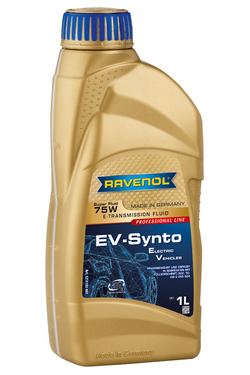
EV-Synto Super Fluid 75W E-TF
RAVENOL EV-Synto Super Fluid 75W E-TF is a synthetic oil that has been specially developed for the requirements of modern electric vehicles. Selected additives ensure good electrical resistance and dielectric properties. The special formulation reduces the energy requirement and at the same time protects the electrical components in the drive train.
Compliance with the requirements:
VW G 055 524
Equivalents OEM:
VAG G052527A2, VAG G052527A2
- Available packaging
- Product parameters
RAVENOL EV-Synto Super Fluid 75W E-TF minimizes friction and wear and thus ensures a long service life of the vehicle. It lubricates and cools the various components of electric vehicles.
Application Note
RAVENOL EV-Synto Super Fluid 75W E-TF is ideally suited for year-round use in all modern electric vehicles. The special additives meet the requirements of many OEMs.
Developed for: Reduction gearboxes in dry and wet engine systems from: MB (EQ-Line), BMW (i-Line), VW (ID-Line), Porsche, Seat, Cupra, Audi, Skoda, Rolls-Royce, Ford, BYD, Renault, Smart, Tata, Jaguar, Citroën
(Manufacturer's instructions must be followed)
First flush the transmission with RAVENOL EV-Synto Super Fluid 75W E-TF and then fill it with fresh oil. Follow the manufacturer's instructions!
Characteristics
- Dielectric properties
- Good electrical resistance
- High wear protection
- Excellent material compatibility
- Very good corrosion protection
- Long service life due to high oxidation stability
| Parameter | Unit | Value | Audit | |
|---|---|---|---|---|
| Type | Synthetic |
Synthetic
|
||
| Recomendations | VW G 055 524 |
VW G 055 524
|
||
| Density at 20 °C | g/cm³ | 837.6 | EN ISO 12185 |
837.6
g/cm³
EN ISO 12185
|
| Color | Yellow | visual |
Yellow
visual
|
|
| Viscosity at 100 °C | mm²/s | 7.3 | DIN 51562-1 |
7.3
mm²/s
DIN 51562-1
|
| Viscosity at 40 °C | mm²/s | 34.3 | DIN 51562-1 |
34.3
mm²/s
DIN 51562-1
|
| Viscosity Index VI | 185 | DIN ISO 2909 |
185
DIN ISO 2909
|
|
| Pourpoint | °C | -48 | DIN ISO 3016 |
-48
°C
DIN ISO 3016
|
| Flashpoint | °C | 218 | DIN EN ISO 2592 |
218
°C
DIN EN ISO 2592
|
| Approvals | VW G 055 524 |
VW G 055 524
|
||
| Thermal conductivity at 0 °C | mW/m∙K | 151.9 | ASTM D7896 |
151.9
mW/m∙K
ASTM D7896
|
| Thermal conductivity at 60 °C | mW/m∙K | 146.7 | ASTM D7896 |
146.7
mW/m∙K
ASTM D7896
|
| Thermal conductivity at 60 °C | mW/m∙K | 140.6 | ASTM D7896 |
140.6
mW/m∙K
ASTM D7896
|
| Thermal conductivity at 100 °C | mW/m∙K | 135.1 | ASTM D7896 |
135.1
mW/m∙K
ASTM D7896
|
| Thermal conductivity at 140 °C | mW/m∙K | 130.4 | ASTM D7896 |
130.4
mW/m∙K
ASTM D7896
|
| Specific conductivity at 0 °C | nS/m | 1.13 | DIN EN 60247 |
1.13
nS/m
DIN EN 60247
|
| Specific conductivity at 20 °C | nS/m | 4 | DIN EN 60247 |
4
nS/m
DIN EN 60247
|
| Specific conductivity at 80 °C | nS/m | 56.55 | DIN EN 60247 |
56.55
nS/m
DIN EN 60247
|
| Specific conductivity at 140 °C | nS/m | 208 | DIN EN 60247 |
208
nS/m
DIN EN 60247
|
| Specific heat capacity at 0 °C | J/g∙K | 1.97 | ASTM D7896 |
1.97
J/g∙K
ASTM D7896
|
| Specific heat capacity at 20 °C | J/g∙K | 2.01 | ASTM D7896 |
2.01
J/g∙K
ASTM D7896
|
| Specific heat capacity at 60 °C | J/g∙K | 2.14 | ASTM D7896 |
2.14
J/g∙K
ASTM D7896
|
| Specific heat capacity at 100 °C | J/g∙K | 2.31 | ASTM D7896 |
2.31
J/g∙K
ASTM D7896
|
| Specific heat capacity at 140 °C | J/g∙K | 2.51 | ASTM D7896 |
2.51
J/g∙K
ASTM D7896
|
| Breakdown voltage | kV | 68,7 | IEC 60156 |
68,7
kV
IEC 60156
|
| Low Temp. Pumping viscosity (MRV) at -40 °C | mPa*s | 9.200 | ASTM D2983 |
9.200
mPa*s
ASTM D2983
|
| Recommendations | VW G 055 524 |
VW G 055 524
|
Hydraulic brake system
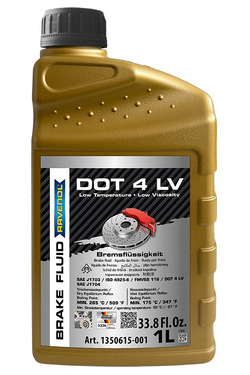
DOT 4 LV
- Available packaging
- Product parameters
| Parameter | Unit | Value | Audit |
|---|
Cooling system
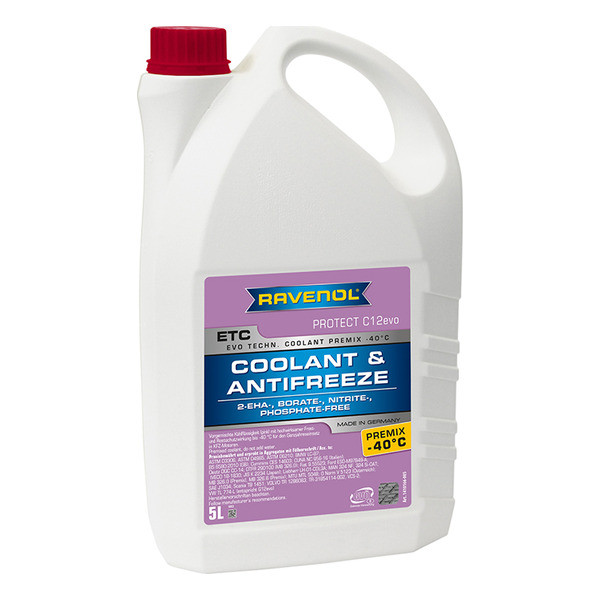
Antifreeze
The quality of an antifreeze is no longer just determined by the antifreeze effect (which automatically exists in an ethylene-glycol based product), but by the rust protection. That is why manufacturers subject antifreeze to lengthy corrosion and cavitation tests.
Compliance with the requirements:
BMW LC-87, BS 6580:2010 (GB), Cummins CES 14603, CUNA NC 956-16 (Italien), Deutz DQC CC-14, DTFR 29D100 (MB 326.0), Fiat 9.55523, Ford ESD-M97B49-A, IVECO 18-1830, JIS K 2234 (Japan), Liebherr LH-01-COL3A, MAN 324 Type NF, MAN 324 Type Si-OAT, MB 326.0, MB 326.6, MTU MTL 5048, O Norm V 5123, SAE J 1034, Scania TB 1451, VOLVO TR-31854114-002, VOLVO TR 1286083, VOLVO VCS-2, VW L 774-L (entspricht G12evo)
- Available packaging
- Product parameters
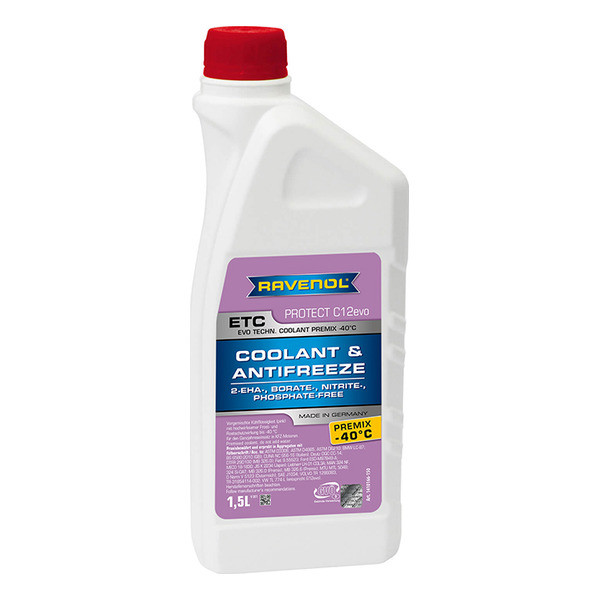
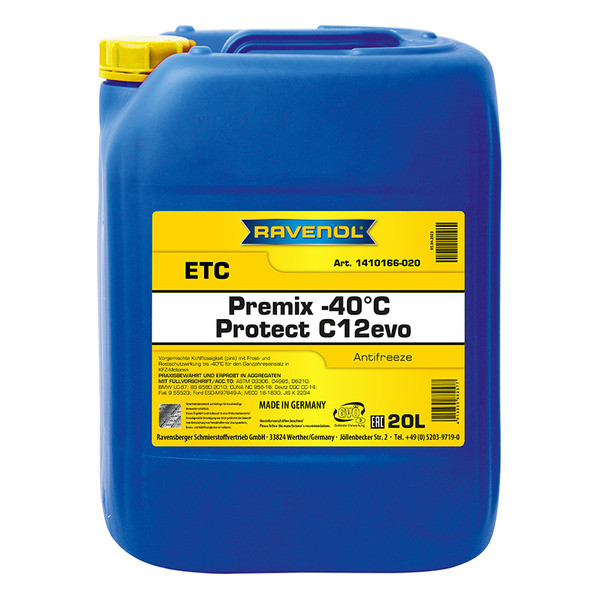
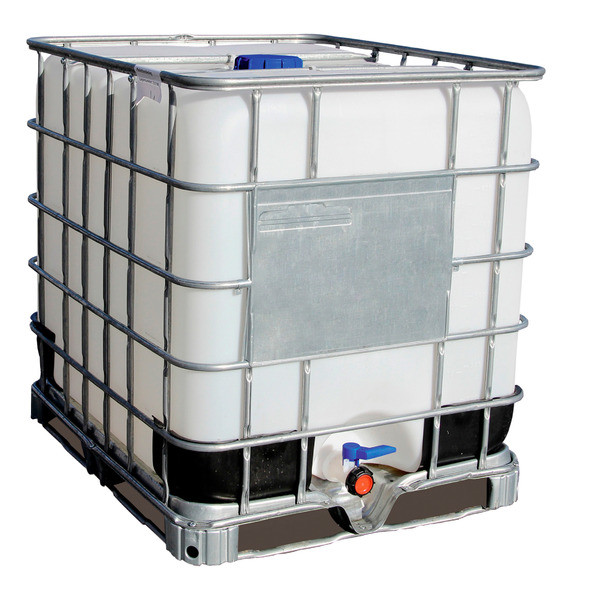
The quality of an antifreeze is no longer just determined by the antifreeze effect (which automatically exists in an ethylene-glycol based product), but by the rust protection. That is why manufacturers subject antifreeze to lengthy corrosion and cavitation tests.
RAVENOL ETC Premix -40°C Protect C12evo protects the cooling system from corrosion and frost as well as from overheating in summer.
Application instructions
RAVENOL ETC Premix -40°C Protect C12evo is a premixed coolant with frost and corrosion protection for year-round use in automotive engines. Even in summer coolant must contain enough antifreeze to ensure good corrosion and overheating protection.
Instructions:
Clean cooling system, check for leaks, flush. Add RAVENOL ETC Premix -40°C Protect C12evo to fill level.
Characteristics
- Modern additive inhibitors based on Si-OAT technology
- Premium anticorrosion additives for optimal protection for all metals and metal alloys used in coolingsystems, including aluminium
- Long-term corrosion protection up to 5 years
- Compatible with elastomers used in automotive radiators
- Prevention of deposits and foam formation in the cooling system
- Miscibility with all other types of radiator antifreeze
- Free from nitrites, amines, phosphates, borates and 2-ethylhexanoic acid (2-EHA)
- Outstanding protection against thermal stress
| Parameter | Unit | Value | Audit | |
|---|---|---|---|---|
| Recommendations | ASTM D3306, ASTM D4985, ASTM D6210, BMW LC-87, BS 6580:2010 (GB), Cummins CES 14603, CUNA NC 956-16 (Italien), Deutz DQC CC-14, DTFR 29D100 (MB 326.0), Fiat 9.55523, Ford ESD-M97B49-A, Ford MU7J 19544 CA, IVECO 18-1830, JIS K 2234 (Japan), Liebherr LH-01-COL3A, MAN 324 NF, MAN 324 Si-OAT, MB 326.0 (Premix), MB 326.6 (Premix), MTU MTL 5048, O Norm V 5123 (Österreich), SAE J1034, Scania TB 1451, VOLVO TR 1286083, VOLVO TR-31854114-002, VOLVO VCS-2, VW TL 774-L (entspricht G12evo) |
ASTM D3306, ASTM D4985, ASTM D6210, BMW LC-87, BS 6580:2010 (GB), Cummins CES 14603, CUNA NC 956-16 (Italien), Deutz DQC CC-14, DTFR 29D100 (MB 326.0), Fiat 9.55523, Ford ESD-M97B49-A, Ford MU7J 19544 CA, IVECO 18-1830, JIS K 2234 (Japan), Liebherr LH-01-COL3A, MAN 324 NF, MAN 324 Si-OAT, MB 326.0 (Premix), MB 326.6 (Premix), MTU MTL 5048, O Norm V 5123 (Österreich), SAE J1034, Scania TB 1451, VOLVO TR 1286083, VOLVO TR-31854114-002, VOLVO VCS-2, VW TL 774-L (entspricht G12evo)
|
||
| Brand | RAVENOL |
RAVENOL
|
||
| ASTM | D3306, D4985, D6210 |
D3306, D4985, D6210
|
||
| Recomendations | BMW LC-87, BS 6580:2010 (GB), Cummins CES 14603, CUNA NC 956-16 (Italien), Deutz DQC CC-14, DTFR 29D100 (MB 326.0), Fiat 9.55523, Ford ESD-M97B49-A, IVECO 18-1830, JIS K 2234 (Japan), Liebherr LH-01-COL3A, MAN 324 Type NF, MAN 324 Type Si-OAT, MB 326.0, MB 326.6, MTU MTL 5048, O Norm V 5123, SAE J 1034, Scania TB 1451, Volvo TR 1286083, Volvo TR-31854114-002, Volvo VCS-2, VW L 774-L (entspricht G12evo) |
BMW LC-87, BS 6580:2010 (GB), Cummins CES 14603, CUNA NC 956-16 (Italien), Deutz DQC CC-14, DTFR 29D100 (MB 326.0), Fiat 9.55523, Ford ESD-M97B49-A, IVECO 18-1830, JIS K 2234 (Japan), Liebherr LH-01-COL3A, MAN 324 Type NF, MAN 324 Type Si-OAT, MB 326.0, MB 326.6, MTU MTL 5048, O Norm V 5123, SAE J 1034, Scania TB 1451, Volvo TR 1286083, Volvo TR-31854114-002, Volvo VCS-2, VW L 774-L (entspricht G12evo)
|
||
| Compliant products | Ford MU7J 19544 CA |
Ford MU7J 19544 CA
|
||
| Density at 20 °C | g/cm³ | 1078 | EN ISO 12185 |
1078
g/cm³
EN ISO 12185
|
| Color | pink | visual |
pink
visual
|
|
| Reserve alkalinity | mgKOH/g | 4 — | ASTM D1121 |
4 —
mgKOH/g
ASTM D1121
|
| Boiling point | °C | 111.1 | ASTM D1120 |
111.1
°C
ASTM D1120
|
| Flashpoint | °C | 110 — | DIN 51758 |
110 —
°C
DIN 51758
|
| pH - value at 20 °C (50 Vol %) | >8 | ASTM D1287 |
>8
ASTM D1287
|
|
| pH - value at 20 °C | >8 | ASTM D1287 |
>8
ASTM D1287
|
|
| Approvals | BMW LC-87, BS 6580:2010 (GB), Cummins CES 14603, CUNA NC 956-16 (Italien), Deutz DQC CC-14, DTFR 29D100 (MB 326.0), Fiat 9.55523, Ford ESD-M97B49-A, IVECO 18-1830, JIS K 2234 (Japan), Liebherr LH-01-COL3A, MAN 324 Type NF, MAN 324 Type Si-OAT, MB 326.0, MB 326.6, MTU MTL 5048, O Norm V 5123, SAE J 1034, Scania TB 1451, Volvo TR 1286083, Volvo TR-31854114-002, Volvo VCS-2, VW L 774-L (entspricht G12evo) |
BMW LC-87, BS 6580:2010 (GB), Cummins CES 14603, CUNA NC 956-16 (Italien), Deutz DQC CC-14, DTFR 29D100 (MB 326.0), Fiat 9.55523, Ford ESD-M97B49-A, IVECO 18-1830, JIS K 2234 (Japan), Liebherr LH-01-COL3A, MAN 324 Type NF, MAN 324 Type Si-OAT, MB 326.0, MB 326.6, MTU MTL 5048, O Norm V 5123, SAE J 1034, Scania TB 1451, Volvo TR 1286083, Volvo TR-31854114-002, Volvo VCS-2, VW L 774-L (entspricht G12evo)
|
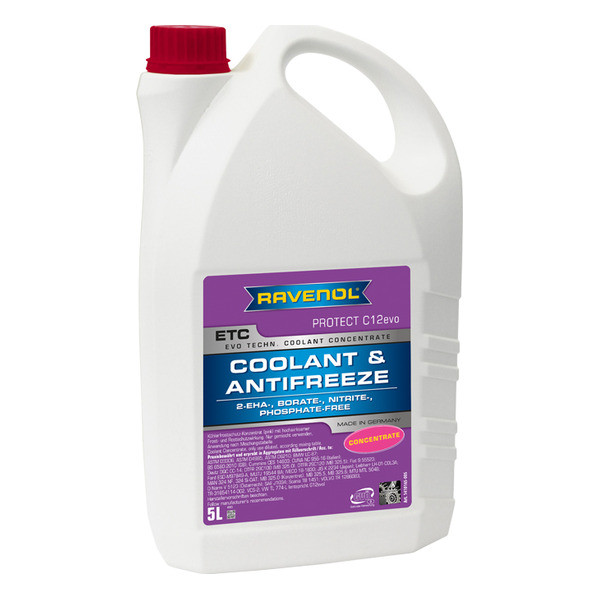
The quality of an antifreeze is no longer just determined by the antifreeze effect (which automatically exists in an ethylene-glycol based product), but by the rust protection. That is why manufacturers subject antifreeze to lengthy corrosion and cavitation tests.
Compliance with the requirements:
BMW LC-87, BS 6580:2010 (GB), Cummins CES 14603, CUNA NC 956-16 (Italien), Deutz DQC CC-14, DTFR 29C100 (MB 325.0), DTFR 29C120 (MB 325.5), Fiat 9.55523, Ford ESD-M97B49-A, IVECO 18-1830, JIS K 2234 (Japan), Liebherr LH-01-COL3A, MAN 324 Type NF, MAN 324 Type Si-OAT, MB 325.0, MB 325.5, MB 325.6, MTU MTL 5048, O Norm V 5123, SAE J 1034, Scania TB 1451, VOLVO TR-31854114-002, VOLVO TR 1286083, VOLVO VCS-2, VW L 774-L (entspricht G12evo)
Equivalents OEM:
Audi G12E100M2
- Available packaging
- Product parameters
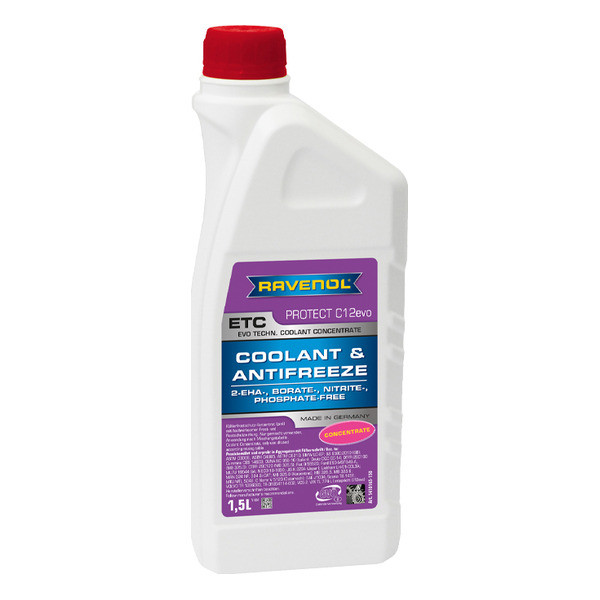
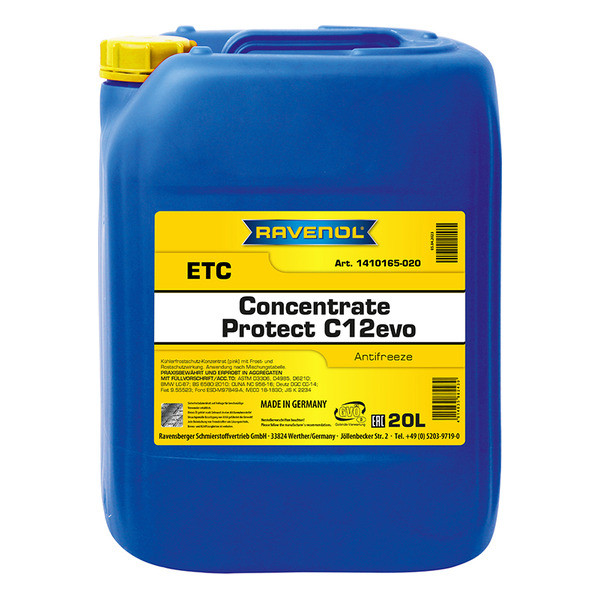
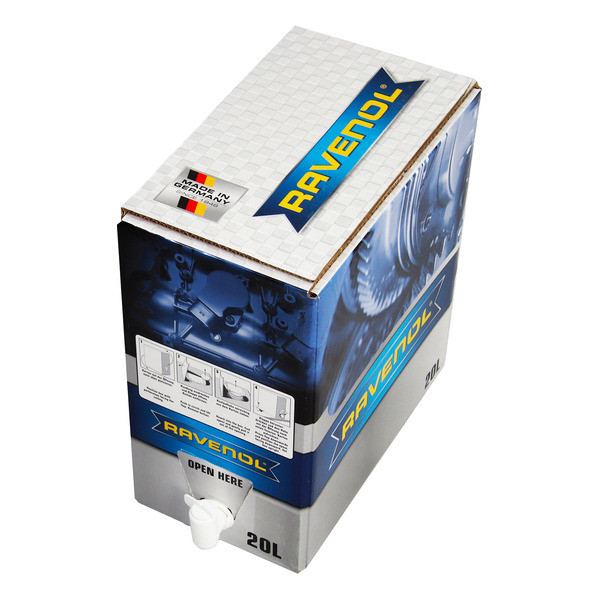
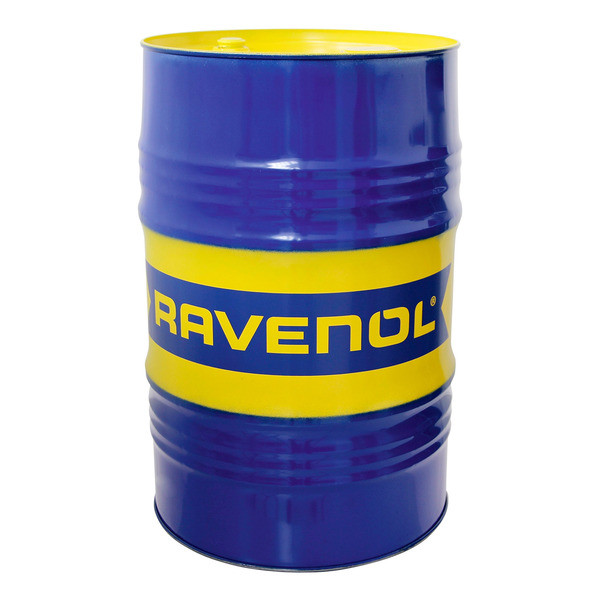
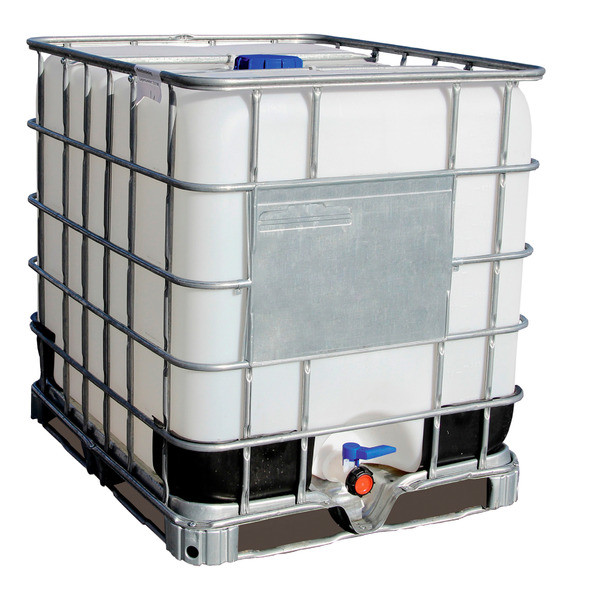
The quality of an antifreeze is no longer just determined by the antifreeze effect (which automatically exists in an ethylene-glycol based product), but by the rust protection. That is why manufacturers subject antifreeze to lengthy corrosion and cavitation tests.
RAVENOL ETC Concentrate Protect C12evo protects the cooling system from corrosion, frost and from overheating in summer.
Application instructions
RAVENOL ETC Concentrate Protect C12evo with highly effective frost and corrosion protection. Application according to the mixture table. Follow manufacturer's recommendations.
Instructions for use: Clean the cooling system, check for leaks, flush. Mix RAVENOL ETC Concentrate Protect C12evo with demineralized or distilled water (according to the mixing chart) and add. Allow engine and heater to warm up, add coolant to fill level.
ATTENTION: Never use undiluted! We recommend a mixing ratio of 50:50 (vol %). The minimum proportion of antifreeze concentrate should be between 35% - 60%, otherwise the product will not have a sufficient effect.
Mixture table:
| Frost protection up to approx. | proportion of concentrate | proportion of water |
|---|---|---|
| -20°C | 35% | 65% |
| -37°C | 50% | 50% |
| -50°C | 60% | 40% |
Characteristics
- Modern additive inhibitors based on Si-OAT technology
- Premium anticorrosion additives for optimal protection for all metals and metal alloys used in coolingsystems, including aluminium
- Long-term corrosion protection up to 5 years
- Compatible with elastomers used in automotive radiators
- Prevention of deposits and foam formation in the cooling system
- Miscibility with all other types of radiator antifreeze
- Free from nitrites, amines, phosphates, borates and 2-ethylhexanoic acid (2-EHA)
- Outstanding protection against thermal stress
| Parameter | Unit | Value | Audit | |
|---|---|---|---|---|
| Recommendations | ASTM D3306, ASTM D4985, ASTM D6210, BMW LC-87, BS 6580:2010 (GB), Cummins CES 14603, CUNA NC 956-16 (Italien), Deutz DQC CC-14, DTFR 29C100 (MB 325.0), DTFR 29C120 (MB 325.5), Fiat 9.55523, Ford ESD-M97B49-A, Ford MU7J 19544 BA, IVECO 18-1830, JIS K 2234 (Japan), Liebherr LH-01-COL3A, MAN 324 NF, MAN 324 Si-OAT, MB 325.0 (Konzentrat), MB 325.5, MB 325.6, MTU MTL 5048, O Norm V 5123 (Österreich), SAE J1034, Scania TB 1451, VOLVO TR 1286083, VOLVO TR-31854114-002, VOLVO VCS-2, VW TL 774-L (entspricht G12evo) |
ASTM D3306, ASTM D4985, ASTM D6210, BMW LC-87, BS 6580:2010 (GB), Cummins CES 14603, CUNA NC 956-16 (Italien), Deutz DQC CC-14, DTFR 29C100 (MB 325.0), DTFR 29C120 (MB 325.5), Fiat 9.55523, Ford ESD-M97B49-A, Ford MU7J 19544 BA, IVECO 18-1830, JIS K 2234 (Japan), Liebherr LH-01-COL3A, MAN 324 NF, MAN 324 Si-OAT, MB 325.0 (Konzentrat), MB 325.5, MB 325.6, MTU MTL 5048, O Norm V 5123 (Österreich), SAE J1034, Scania TB 1451, VOLVO TR 1286083, VOLVO TR-31854114-002, VOLVO VCS-2, VW TL 774-L (entspricht G12evo)
|
||
| Brand | RAVENOL |
RAVENOL
|
||
| ASTM | D3306, D4985, D6210 |
D3306, D4985, D6210
|
||
| Recomendations | BMW LC-87, BS 6580:2010 (GB), Cummins CES 14603, CUNA NC 956-16 (Italien), Deutz DQC CC-14, DTFR 29C100 (MB 325.0), DTFR 29C120 (MB 325.5), Fiat 9.55523, Ford ESD-M97B49-A, IVECO 18-1830, JIS K 2234 (Japan), Liebherr LH-01-COL3A, MAN 324 Type NF, MAN 324 Type Si-OAT, MB 325.0, MB 325.5, MB 325.6, MTU MTL 5048, O Norm V 5123, SAE J 1034, Scania TB 1451, Volvo TR 1286083, Volvo TR-31854114-002, Volvo VCS-2, VW L 774-L (entspricht G12evo) |
BMW LC-87, BS 6580:2010 (GB), Cummins CES 14603, CUNA NC 956-16 (Italien), Deutz DQC CC-14, DTFR 29C100 (MB 325.0), DTFR 29C120 (MB 325.5), Fiat 9.55523, Ford ESD-M97B49-A, IVECO 18-1830, JIS K 2234 (Japan), Liebherr LH-01-COL3A, MAN 324 Type NF, MAN 324 Type Si-OAT, MB 325.0, MB 325.5, MB 325.6, MTU MTL 5048, O Norm V 5123, SAE J 1034, Scania TB 1451, Volvo TR 1286083, Volvo TR-31854114-002, Volvo VCS-2, VW L 774-L (entspricht G12evo)
|
||
| Compliant products | Ford MU7J 19544 BA |
Ford MU7J 19544 BA
|
||
| Density at 20 °C | g/cm³ | 1125 | EN ISO 12185 |
1125
g/cm³
EN ISO 12185
|
| Color | pink | visual |
pink
visual
|
|
| Reserve alkalinity | mgKOH/g | 10 — | ASTM D1121 |
10 —
mgKOH/g
ASTM D1121
|
| Boiling point | °C | 178.9 | ASTM D1120 |
178.9
°C
ASTM D1120
|
| Water content | % | — 4 | ASTM D1123 |
— 4
%
ASTM D1123
|
| Flashpoint | °C | 110 — | DIN 51758 |
110 —
°C
DIN 51758
|
| Freezing point (50 % solution) | °C | -38 | ASTM D1177 |
-38
°C
ASTM D1177
|
| pH - value at 20 °C (50 Vol %) | 7,5-8,5 | ASTM D1287 |
7,5-8,5
ASTM D1287
|
|
| Approvals | BMW LC-87, BS 6580:2010 (GB), Cummins CES 14603, CUNA NC 956-16 (Italien), Deutz DQC CC-14, DTFR 29C100 (MB 325.0), DTFR 29C120 (MB 325.5), Fiat 9.55523, Ford ESD-M97B49-A, IVECO 18-1830, JIS K 2234 (Japan), Liebherr LH-01-COL3A, MAN 324 Type NF, MAN 324 Type Si-OAT, MB 325.0, MB 325.5, MB 325.6, MTU MTL 5048, O Norm V 5123, SAE J 1034, Scania TB 1451, Volvo TR 1286083, Volvo TR-31854114-002, Volvo VCS-2, VW L 774-L (entspricht G12evo) |
BMW LC-87, BS 6580:2010 (GB), Cummins CES 14603, CUNA NC 956-16 (Italien), Deutz DQC CC-14, DTFR 29C100 (MB 325.0), DTFR 29C120 (MB 325.5), Fiat 9.55523, Ford ESD-M97B49-A, IVECO 18-1830, JIS K 2234 (Japan), Liebherr LH-01-COL3A, MAN 324 Type NF, MAN 324 Type Si-OAT, MB 325.0, MB 325.5, MB 325.6, MTU MTL 5048, O Norm V 5123, SAE J 1034, Scania TB 1451, Volvo TR 1286083, Volvo TR-31854114-002, Volvo VCS-2, VW L 774-L (entspricht G12evo)
|
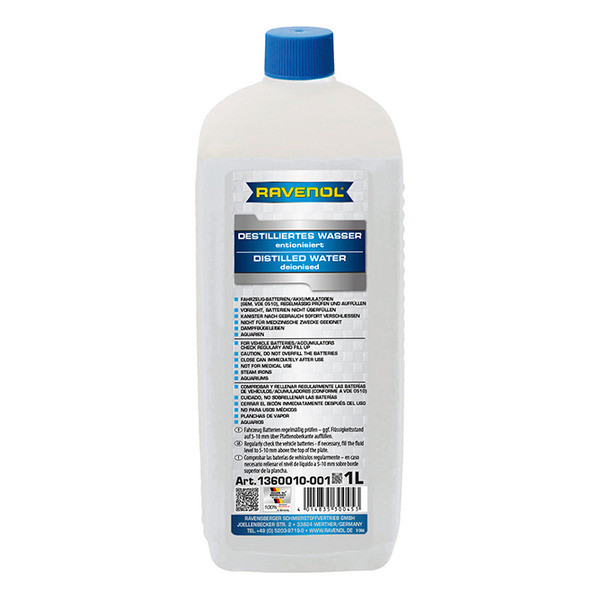
For batteries
In the course of this process, the water flows through a column filled with ion exchange resin. This has theability to exchange its accumulated ions for the ions present in the water.
Compliance with the requirements:
DIN 43530-4, DIN EN 50272
Equivalents OEM:
BMW 83190394350, BMW 83190394350
- Available packaging
- Product parameters
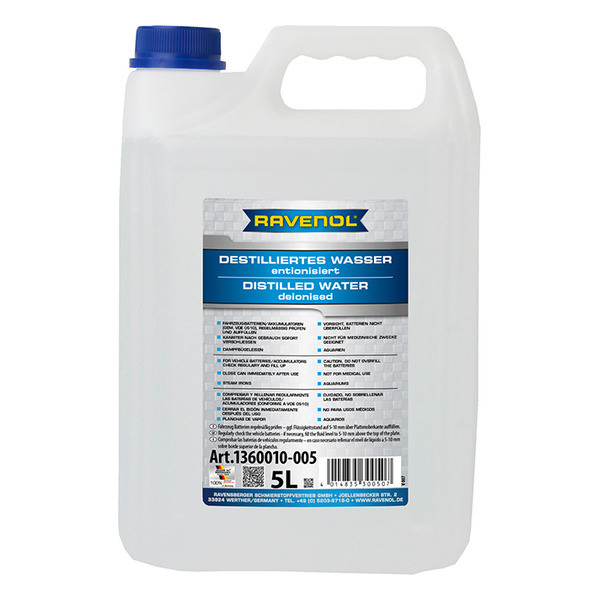
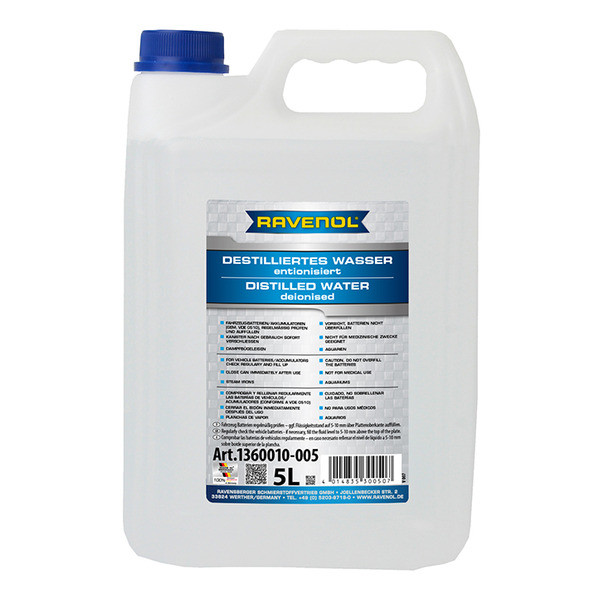
Volume:
5 L, specialist. canister
vendor code:
1360010-005
Code:
4014835300514
Volume:
208 L
vendor code:
1360010-208
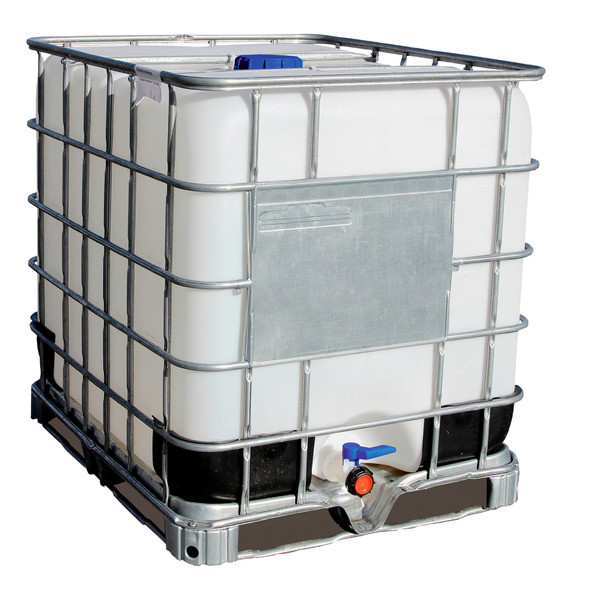
Volume:
1000 L
vendor code:
1360010-700
In the course of this process, the water flows through a column filled with ion exchange resin. This has theability to exchange its accumulated ions for the ions present in the water.
As the ion exchange resin cannot accumulate an infinite number of ions, they have to be “revived”, i.e. theyhave to be regenerated. This takes place using the currently most commonly used regeneration agents: sodiumchloride (water softening), hydrochloric acid (cation exchange) and sodium hydroxide (anion exchange).The conductivity of the water flowing through is constantly checked in a fully automated process and the ionexchanger unit regulates itself automatically.
RAVENOL destilliertes Wasser deionised water is regularly checked by taking samples.
Application instructions
RAVENOL destilliertes Wasser is ideally suited to filling up vehicle batteries and for steam irons and aquariums (to reduce the hardness of the water).
| Parameter | Unit | Value | Audit | |
|---|---|---|---|---|
| Recommendations | DIN 43 530-4 Akkumulatoren, DIN EN 50272, Elektrolyt und Nachfüllwasser |
DIN 43 530-4 Akkumulatoren, DIN EN 50272, Elektrolyt und Nachfüllwasser
|
||
| Brand | RAVENOL |
RAVENOL
|
||
| Recomendations | DIN 43530-4, DIN EN 50272 |
DIN 43530-4, DIN EN 50272
|
||
| Approvals | DIN 43530-4, DIN EN 50272 |
DIN 43530-4, DIN EN 50272
|
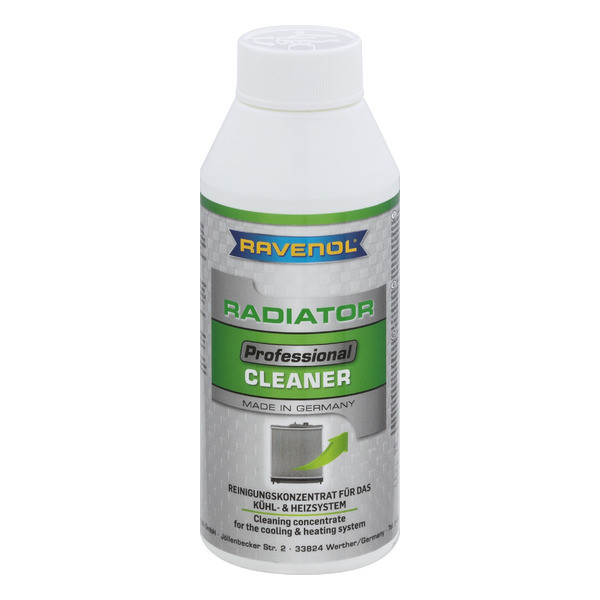
Additive
RAVENOL Professional Radiator Cleaner breaks down and binds greasy and oily deposits in radiators, heating systems and pipelines.
Equivalents OEM:
Ford MP14300500AB
- Available packaging
- Product parameters
RAVENOL Professional Radiator Cleaner breaks down and binds greasy and oily deposits in radiators, heating systems and pipelines.
RAVENOL Professional Radiator Cleaner infiltrates and eliminates sludge and corrosion deposits.RAVENOL Professional Radiator Stop Cleaner neutralises lime residue.
Application instructions
RAVENOL Professional Radiator Cleaner is added to the radiator. It is recommended to replace rubber parts affected by oil seepage.
Area of application:
Radiator repairs
In the event of reduced radiator performance
In the event of deposits in the cooling system
Changing coolant
For cleaning purposes after engine repairs due to oil in the cooling system
Application: RAVENOL Professional Radiator Cleaner suffices for up to 10 litres of coolant.
Fill in
RAVENOL Professional Radiator Cleanerin the used coolant and allow the engine to run at operating temperature for approx. 30 minutes. Drain contaminated mixture – in the case of severe contamination, repeat treatment if necessary. Rinse cooling system with clear water. Refill and remove air after cleaning the cooling system and check for leak tightness.
RAVENOL Professional Radiator Cleaner can lead to an improved cooling performance after repairs on the cooling system.
Characteristics
- Cleaning of the cooling and heating system
- Protection of the new coolant against prior contamination
- Elimination of sludge and corrosion residue
| Parameter | Unit | Value | Audit | |
|---|---|---|---|---|
| Color | Colorless | visual |
Colorless
visual
|
|
| Density at 20 °C | g/cm³ | 1003 | EN ISO 12185 |
1003
g/cm³
EN ISO 12185
|
| pH - value at 20 °C | 10,25 | DIN 19268 |
10,25
DIN 19268
|
|
| Brand | RAVENOL |
RAVENOL
|